The math on compound interest is brutal — and most people...Continue reading→


Michigan Business – News – History
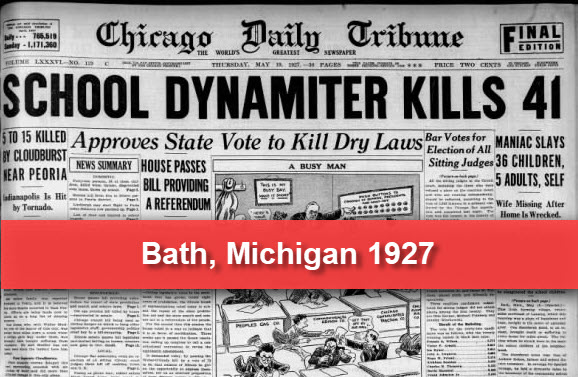
On May 18, 1927, a quiet Michigan farming town became the site of the deadliest school massacre in U.S. history.
Bath, Michigan—a place built on routine, neighbors, and trust—was shattered in minutes.
The Bath Consolidated School had been open for only a few years. It symbolized progress: modern classrooms, centralized education, and pride for a small community. No one suspected that one of the town’s own residents had turned it into a weapon.
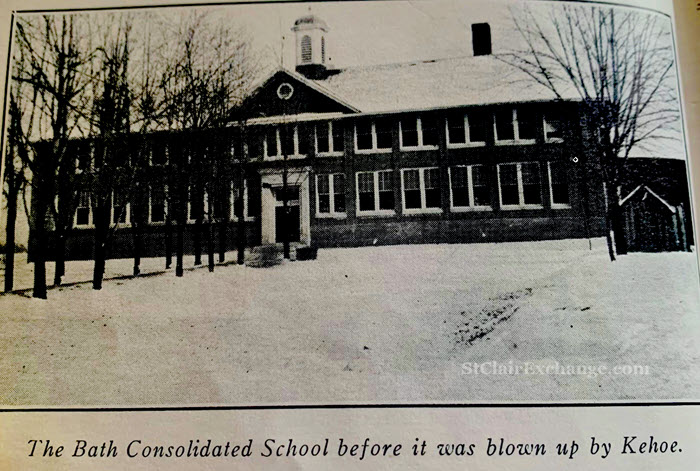
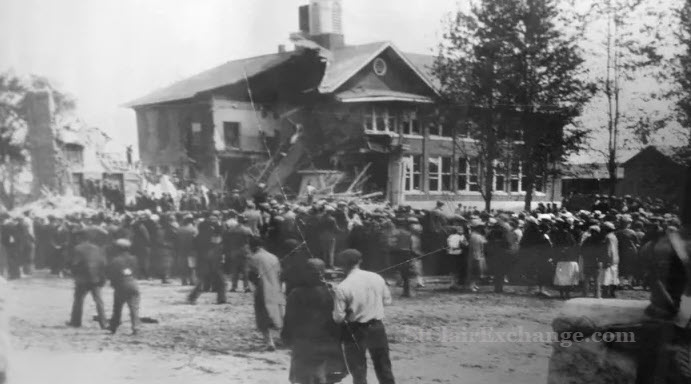
Andrew Kehoe, a local farmer and school board treasurer, had been quietly stockpiling explosives for months. Dynamite and pyrotol were hidden beneath floors and crawl spaces, placed with chilling precision. On the morning of May 18, part of the school exploded, killing students and teachers instantly.

As rescuers rushed to help, Kehoe drove up in his truck—also packed with explosives. Moments later, it detonated, killing more people and himself.
When the smoke cleared, 38 children and 6 adults were dead. Dozens more were injured. Authorities later discovered that half the explosives in the school never detonated. The death toll could have been far worse.
There was no manifesto. No warning. Just a handwritten sign found on Kehoe’s farm:
“Criminals are made, not born.”
The Bath School Disaster forced the nation to confront a hard truth: schools could be targets, even from within their own communities. In its aftermath came stricter building inspections, oversight of explosives, and early conversations about school safety protocols—long before such discussions were common.
Today, Bath remembers quietly. Memorials stand where laughter once filled hallways. The lesson endures: evil doesn’t always announce itself—and vigilance is not paranoia, it’s protection.
The Bath School Disaster, Arnie Bernstein, 2009, https://www.press.umich.edu/91741/bath_massacre
Bath School Disaster, Michigan Historical Center, n.d., https://www.michigan.gov/mhc/learn/archives/bath-school-disaster
The Bath School Massacre, Smithsonian Magazine, Lorraine Boissoneault, 2017, https://www.smithsonianmag.com/history/remembering-bath-school-massacre-1927-180963482/
Andrew Kehoe is one of those figures where the details are disturbing because they’re so ordinary.
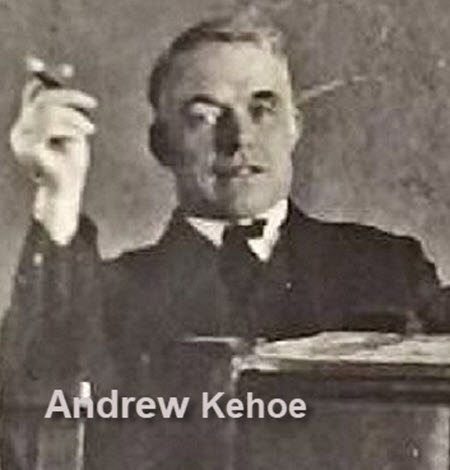
Andrew Philip Kehoe was a 55-year-old farmer in Bath Township, just northeast of Lansing. He wasn’t a drifter or an outsider. He owned land, paid taxes, attended meetings, and served as treasurer of the Bath Consolidated School board. On paper, he was a responsible local citizen.
But beneath that surface, things were unraveling.
Kehoe was deeply resentful. He was angry about school taxes, bitter over failed elections, and drowning financially after struggling with his farm. Neighbors later described him as quiet, rigid, and prone to grudges—a man who believed the world had wronged him and refused to let it go. In my opinion, he fits a dangerous pattern we still see today: someone who externalizes blame and stews in it.
What makes Kehoe especially chilling is how methodical he was. Over many months, he legally purchased explosives, hiding them beneath the school floors and inside his farm buildings. He planned timing, placement, and escape routes. This was not a snap decision. It was a slow burn.
Before attacking the school, Kehoe murdered his wife, Nellie, who had been chronically ill, and wired his farm to explode. A sign left behind read:
“Criminals are made, not born.”
That sentence is often quoted because it feels like an attempt at justification—but it explains nothing.
Kehoe left no manifesto, no speech, no ideology. Just devastation. Historians widely agree that his motive was personal grievance, not fame or politics—which is part of why the case is so unsettling. There’s no neat box to put him in.
Bath didn’t create a monster. It lived next to one—and didn’t know it.

 BodhiJack’s Pearls of Wisdom…