A seasoned look at how excessive job requirements can signal internal uncertainty rather than high standards in small businesses.
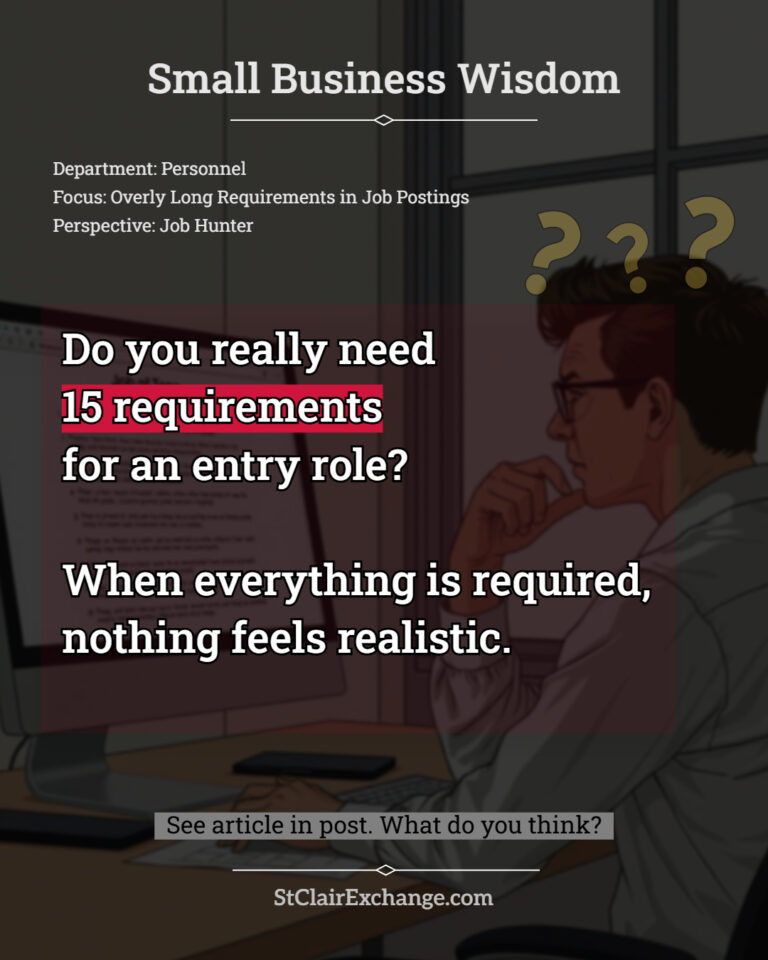
Long requirement lists often say more about the workplace than the role itself. From a job hunter’s seat, excessive “must-haves” don’t read as thorough—they read as unresolved. When a posting stacks credentials, tools, soft skills, and personality traits into a single list, it quietly suggests the company hasn’t decided what success actually looks like.
This matters because clarity attracts alignment. Ambiguity attracts hesitation. Strong candidates don’t assume they’re underqualified—they assume the employer is still figuring things out. The longer the list, the more likely it reflects internal compromise rather than real job needs.
A common example shows up in small teams hiring under pressure. One posting asks for marketing strategy, content creation, analytics, CRM management, and customer support “as needed.” In practice, successful teams usually narrow the role after realizing the first hire was spread too thin. The adjustment isn’t about lowering standards—it’s about naming the work that actually matters.
When requirements multiply, accountability often blurs.
Bottom Line: Overloaded job requirements often signal uncertainty about the role, not higher standards.
Final thoughts:
- Well-run teams tend to separate “day-one essentials” from skills learned on the job.
- Clear roles often come from environments that already know how success is measured.
- Focused job descriptions usually reflect healthier internal alignment than exhaustive lists.






 BodhiJack’s Pearls of Wisdom…