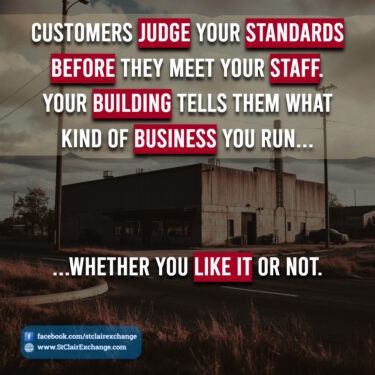
Customers read your building before they meet you. Broken signs, clutter, and grime communicate neglect, shaping expectations long before your product or service has a chance to speak.
Before a word is spoken, customers notice what you maintain and what you ignore. The condition of your building sets the tone. It answers an unspoken question: How seriously does this business take itself?
The uncomfortable truth is simple. People assume consistency. If the exterior looks neglected, they expect the same carelessness inside—whether that’s fair or not.
Most owners resist this idea because they separate appearances from outcomes. They believe good work should stand on its own. The problem is that customers don’t experience your work first. They experience your signals.
The hidden cost of ignoring those signals isn’t just aesthetics. It’s lowered expectations. Customers become cautious, skeptical, and price-sensitive before the conversation even begins.
Common rationalizations creep in. Business owners tell themselves customers care more about results. They blame time, staff shortages, or old buildings. But none of those explanations change how neglect is interpreted.
Example...
Consider a small service business with a faded sign, weeds at the entrance, and clutter visible through the windows. Inside, the work may be competent. But new customers arrive already braced for problems. Staff feel it. Conversations start defensive instead of confident.
Quiet levers are already within reach. Maintenance is a signal, not a cosmetic upgrade. Cleanliness reflects standards. Consistency communicates reliability. Attention to small details implies attention to large ones. Neglect always speaks louder than explanations.
There’s no dramatic fix required. Just an honest understanding of cause and effect. Your building speaks every day. Customers listen long before you get the chance.





 BodhiJack’s Pearls of Wisdom…