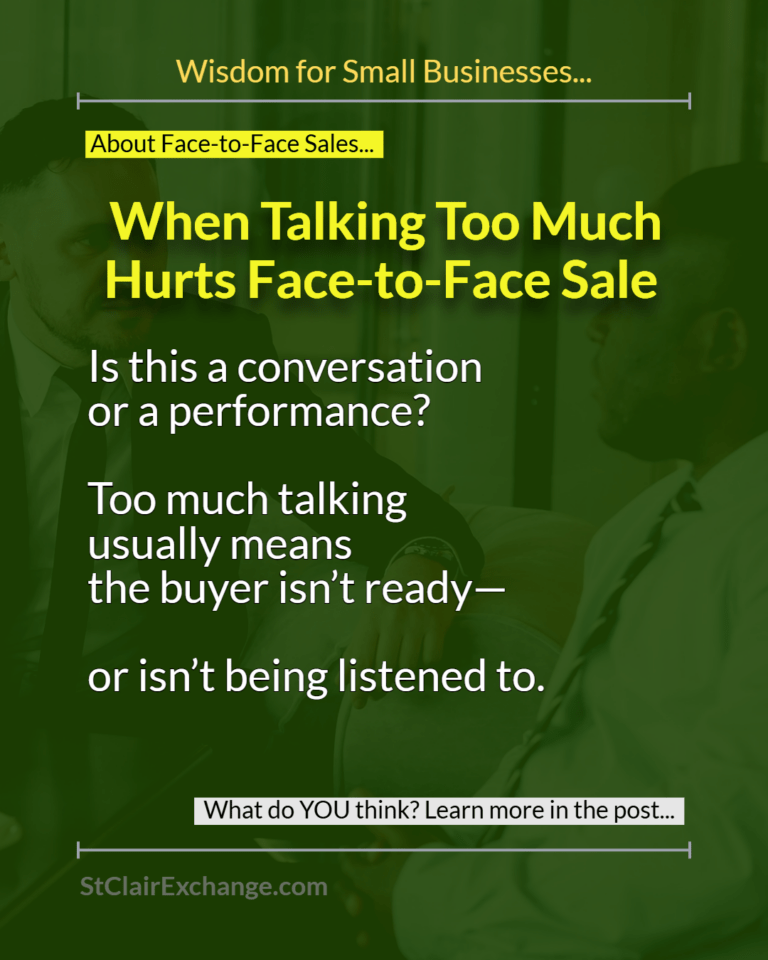
In face-to-face sales, talking often increases when certainty decreases. When a buyer hesitates, many sellers instinctively fill the space with explanations—features, benefits, stories. It feels helpful, but it often creates pressure without resolving doubt.
Most buyers don’t need more information at the decision point. They need time to process what they already have. When silence disappears, trust often goes with it. The seller feels productive. The buyer feels rushed.
Example:
A prospect reviews a proposal, leans back, and goes quiet. The seller jumps in—re-explaining pricing, justifying value, adding a last-minute bonus. The buyer nods politely but grows guarded. What started as reflection turns into resistance.
Solution:
Instead of filling the pause, the seller stays silent—or asks a simple, open question like, “What’s coming up for you right now?” The space gives the buyer permission to surface the real concern, which is often emotional or logistical—not informational.
Experienced sellers treat silence as feedback. Pauses reveal readiness—or the lack of it—without forcing a response. Talking through hesitation rarely removes it. It just postpones the decision.
Bottom Line: Excessive talking in sales usually signals discomfort rather than progress.




 BodhiJack’s Pearls of Wisdom…